

How to Start Your Own Organic Product Business: From Himalayan Farms to Online Success
January 19, 2026 2026-01-19 16:58Starting an organic product business isn’t just about selling goods—it’s about connecting farmers with conscious consumers who care where their food comes from. Whether you’re inspired by traditional farming methods or want to bring authentic regional products to wider markets, the path from farm to online store has never been more accessible.
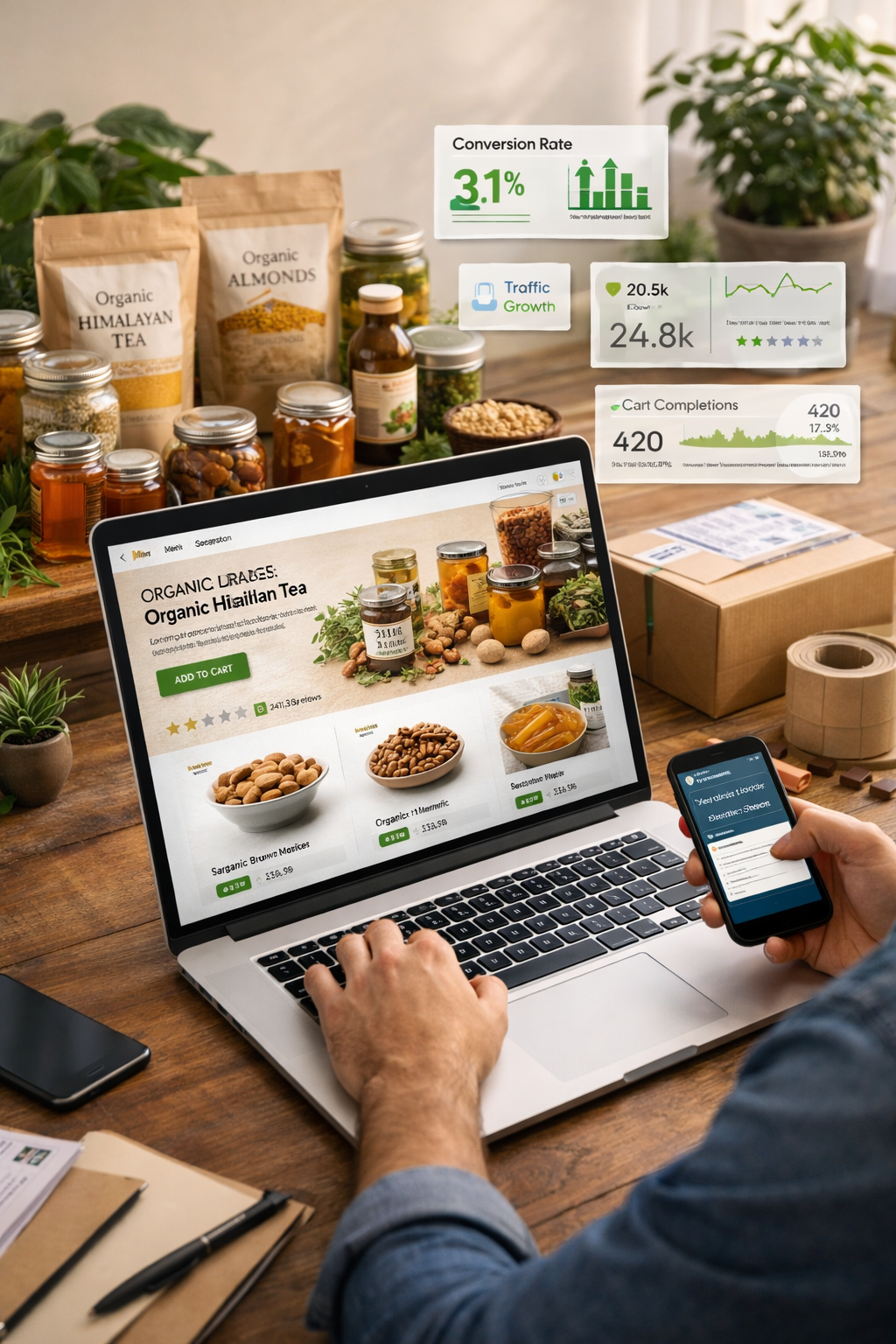
I’ve watched dozens of small organic businesses go from local market stalls to thriving e-commerce stores. The ones that succeed share common traits: they understand their products deeply, they build genuine connections with suppliers, and they master the technical side of online selling without losing their authentic voice.
Understanding the Organic Products Market
The organic food industry has exploded over the past decade. Consumers aren’t just reading labels anymore—they’re researching origins, farming practices, and supply chains. This shift creates massive opportunities for businesses that can tell authentic stories.
When you’re selling products from specific regions like the Himalayas, Himachal Pradesh, or Uttarakhand, you’re not competing with mass-market brands. You’re offering something they can’t replicate: authenticity, traditional farming methods, and direct connections to farming communities.
Your ideal customers care about sustainability. They want to know that their purchase supports small farmers. They’re willing to pay premium prices, but only if they believe in your mission and trust your sourcing. This means your business foundation must be built on genuine relationships with producers and transparent operations.
Choosing Your Niche Within Organic Products
Don’t try to sell everything organic. The most successful businesses I’ve seen started incredibly focused. Maybe you specialize in wild honey from a specific mountain range. Perhaps you focus exclusively on heritage grain varieties that have been grown in one valley for centuries.
Think about what makes your products irreplaceable. Is it the altitude where they’re grown? The traditional processing methods? The specific varieties that can’t be found anywhere else? That unique angle becomes your competitive advantage.
Consider categories like honey, ghee, pulses, cereals, spices, or traditional health foods. Each has different challenges. Honey needs proper quality certifications and testing. Ghee requires careful storage and shipping. Pulses need education about heritage varieties versus modern hybrids. Pick what you understand best and can source consistently.
Regional specialization works incredibly well. “Himalayan organic products” means something different than generic organic. The altitude, climate, and traditional farming methods of mountain regions produce distinct flavors and properties. Consumers recognize this and actively seek these products.
Building Relationships with Farmers and Producers
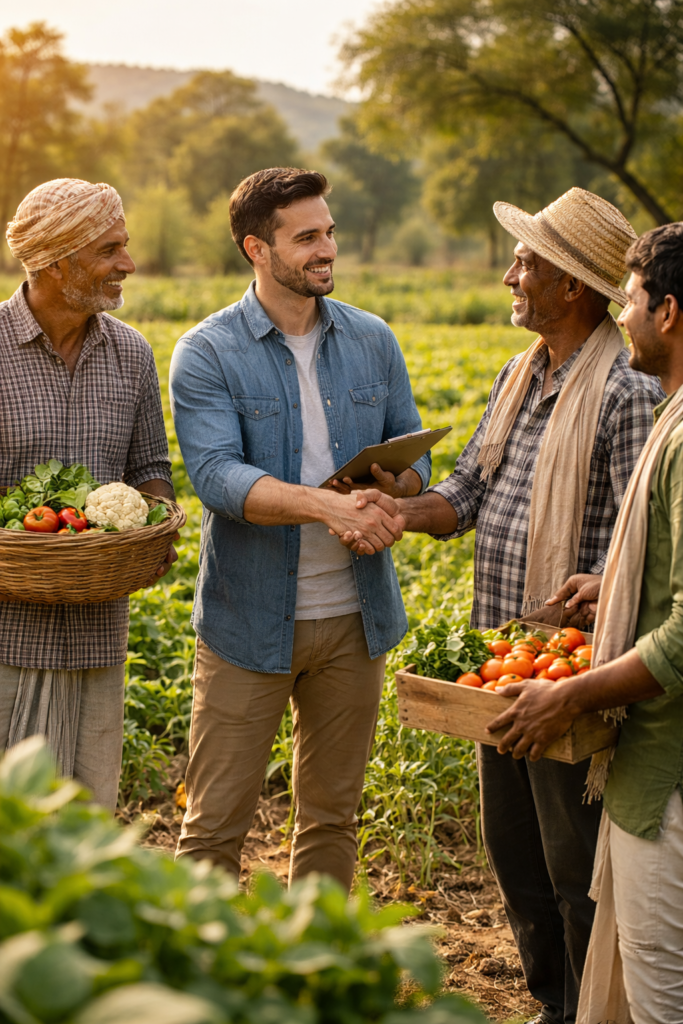
Your supplier relationships determine everything. I can’t stress this enough—if you’re disconnected from your farmers, your business has no foundation.
Start by visiting farms personally. Spend time understanding how they grow, harvest, and process their products. Learn what challenges they face. Understand their capacity and seasonal limitations. These conversations reveal what you can realistically promise to customers.
Fair pricing matters immensely. Many farmers have been exploited by middlemen for generations. When you offer transparent, fair prices and direct payment, you build loyalty that protects your supply chain. Your farmers become partners who’ll prioritize your orders during shortage seasons.
Document everything about your sourcing. Take photos of farms, farming methods, and processing. Record conversations with farmers. Collect certifications and test reports. This documentation becomes your marketing gold—customers want to see the real people and places behind their food.
Create contracts that protect both sides. Specify quality standards, delivery schedules, payment terms, and dispute resolution. Written agreements prevent misunderstandings and build professional relationships even with traditional farmers who may not be used to formal business practices.
Naming Your Business and Building Brand Identity
Your business name carries tremendous weight. It needs to communicate your values, connect with your niche, and be memorable enough that customers can easily find you again.
Think about what you want your name to convey. Does it reference geography? Purity? Tradition? The farming community? Names that tell a story stick in people’s minds better than generic descriptors.
Your domain name should match your business name as closely as possible. Avoid hyphens, numbers, or misspellings. Keep it short and easy to type. A .com extension still carries the most credibility, especially for e-commerce.
Think beyond just the domain—check social media availability too. You want consistent naming across Instagram, Facebook, and YouTube. Inconsistent naming confuses customers and dilutes your brand.
Consider trademark searches before finalizing anything. The last thing you need is a cease-and-desist letter after you’ve built recognition. Many countries have online trademark databases you can search for free.
Your visual identity should reflect your product origins. If you’re selling Himalayan products, your branding might incorporate mountain imagery, traditional patterns, or colors from the region. But avoid clichés—find authentic visual elements that genuinely represent your sourcing regions.
Legal Requirements and Certifications
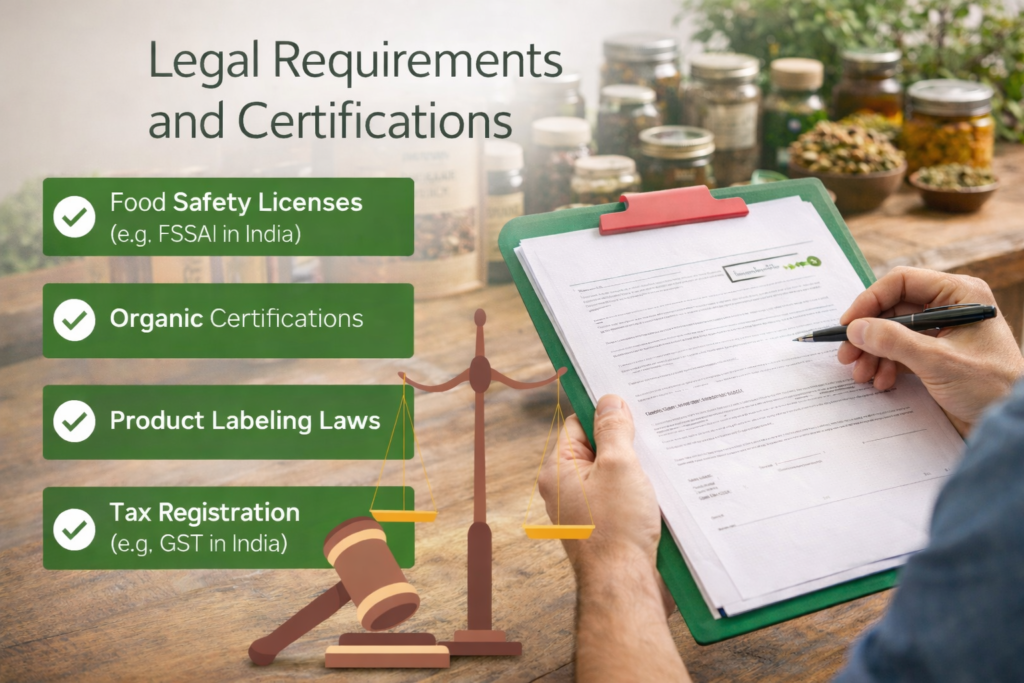
Selling food products online comes with serious legal responsibilities. Different countries have different requirements, but certain elements are universal.
Food business operator licenses are your starting point. In India, this means FSSAI registration or a license, depending on your turnover. Don’t skip this—selling without proper licenses can shut you down permanently.
Organic certifications add credibility but aren’t always necessary initially. If your farmers have organic certifications, leverage those. If not, be honest about being “naturally grown” or “traditionally farmed” without synthetic chemicals. Never claim organic certification you don’t have.
Product labeling laws are strict. You must list ingredients, nutritional information, allergen warnings, manufacture dates, best-before dates, manufacturer details, and country of origin. Get this wrong, and you’ll face fines or product recalls.
Tax registration is mandatory. Get your GST registration (in India) or equivalent tax ID for your country. Set up proper accounting from day one. Food businesses face intense scrutiny during audits—maintain impeccable records.
Insurance protects you from catastrophic losses. Product liability insurance is essential. What if someone has an allergic reaction? What if a batch gets contaminated? Insurance means these incidents don’t bankrupt you.
Building Your E-commerce Website
Your website is your storefront, catalog, payment processor, and brand ambassador rolled into one. It needs to work flawlessly while telling your story compellingly.
Choose an e-commerce platform that scales with you. WooCommerce on WordPress gives you complete control and low costs. Shopify offers ease of use but higher fees. BigCommerce works well for businesses planning rapid growth. Each has tradeoffs—pick based on your technical skills and budget.
Your website structure matters enormously for both customers and search engines. Organize products logically by category. Create clear navigation paths. Use a proper site structure with main categories, subcategories, and individual product pages that make sense.
Site architecture affects how search engines crawl and rank your pages. . Proper sitemap management means your product pages get indexed faster and rank better in search results.
Product pages need rich descriptions that go beyond basic specifications. Tell the story of each product. Where exactly does it come from? What makes it special? How is it traditionally used? Include high-quality photos from multiple angles and, when possible, photos from the farm or processing facility.
Mobile optimization isn’t optional anymore. Over 60% of e-commerce traffic comes from mobile devices. Test your site on actual phones, not just desktop browser emulators. The checkout process especially needs to work seamlessly on small screens.
Payment gateway integration determines whether customers can actually buy from you. In India, Razorpay and Instamojo work well for small businesses. Internationally, Stripe and PayPal dominate. Offer multiple payment options—cards, UPI, net banking, and wallets. Every payment option you skip loses you customers.
Shipping integration saves massive time. Connect your store to shipping APIs from the couriers you’ll use. Automatic rate calculation and label printing eliminate manual work. Consider offering flat-rate shipping for simplicity, especially when starting.
Creating Compelling Product Descriptions
Generic product descriptions kill sales. “Pure organic honey, 500g” tells customers nothing that makes them want to buy from you specifically.
Tell the origin story. “This wild honey comes from hives in oak forests at 2,400 meters altitude in Kumaon. Local beekeepers from three villages harvest it once yearly during October when the flowers are at peak nectar production.”
Describe the taste and experience. “You’ll notice a dark amber color and thick consistency. The flavor starts floral and mild, then develops a slightly spicy finish from the Himalayan wildflowers. It crystallizes slowly due to high fructose content.”
Explain traditional uses. “Local communities have used this honey for centuries to soothe coughs, boost immunity during winter, and as an energy source for high-altitude treks.”
Include specific details that prove authenticity. “Each batch is tested for purity and adulteration. We provide lab reports showing zero added sugars and antibiotics. The moisture content stays below 18%, indicating proper harvesting and storage.”
Address practical concerns. “Store at room temperature. If crystallization occurs, gently warm the jar in hot water. Never microwave. The glass jar is reusable—clean it thoroughly for storage or return it for a discount on your next order.”
Use bullet points for specifications—weight, dimensions, shelf life, storage instructions. But weave the storytelling into paragraph format where it flows naturally.
Pricing Strategy for Organic Products
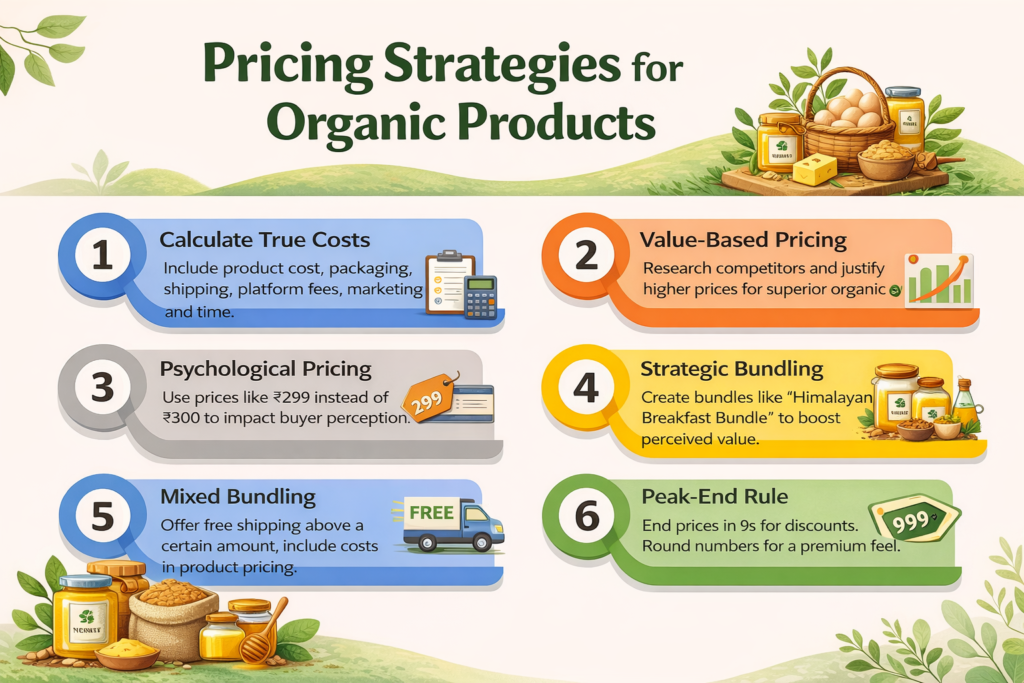
Pricing organic products requires balancing fair farmer payments, operational costs, and market expectations while maintaining profitability.
Calculate your true costs precisely. Include product cost, packaging, shipping materials, payment gateway fees, platform fees, marketing costs, and your time. Many new businesses underprice because they forget hidden costs.
Research competitor pricing, but don’t just match them. If you’re genuinely offering superior products or supporting farmers better, charge accordingly. Document and communicate what justifies your pricing.
Consider psychological pricing. ₹299 converts better than ₹300. ₹999 hits a different mental threshold than ₹1,050. But don’t be tacky about it—if your brand positioning is premium and authentic, round numbers sometimes communicate quality better.
Bundle products strategically. A “Himalayan breakfast bundle” with honey, ghee, and millets at a slight discount moves more products than selling each individually. Bundles increase average order value while giving customers perceived savings.
Shipping costs significantly impact conversion. Free shipping on orders above a certain amount encourages larger purchases. But build shipping costs into product pricing so free shipping doesn’t hurt margins.
Marketing Your Organic Products Authentically
Marketing organic products demands authenticity. Your customers are skeptical of greenwashing and empty claims. They want proof, stories, and transparency.
Content marketing works exceptionally well for food businesses. Write about farming methods, seasonal variations, traditional recipes, health benefits backed by research, and farmer profiles. Educational content builds trust while attracting organic search traffic.
Social media allows direct storytelling. Post photos and videos from farms. Show harvesting processes. Introduce your farmers by name. Share customer recipes and testimonials. Behind-the-scenes content performs incredibly well because it proves authenticity.
Instagram and Facebook work best for visual storytelling. YouTube is perfect for longer content—farm visits, processing explanations, and cooking demonstrations. LinkedIn works surprisingly well for B2B outreach if you’re selling to restaurants or retailers.
Email marketing remains your most valuable channel. Collect emails from day one. Send weekly or biweekly updates about new products, seasonal availability, recipes, and farm stories. A thousand engaged email subscribers are worth more than ten thousand random social media followers.
Customer testimonials and reviews are social proof that converts skeptical visitors into buyers. Encourage reviews by following up after delivery. Feature the best reviews prominently on your website. Video testimonials carry even more weight.
Collaborate with food bloggers, nutritionists, and lifestyle influencers who align with your values. Don’t chase huge influencers with millions of followers. Micro-influencers with engaged communities in health, sustainability, or traditional food niches drive better results.
SEO for organic products targets specific long-tail keywords. “Wild Himalayan honey, Uttarakhand” is more valuable than “organic honey.” “Authentic A2 Badri cow ghee” attracts better customers than generic “pure ghee.” Optimize for specificity..
Testing and Validating Before Full Launch
Before investing heavily in inventory, branding, and marketing, validate that your business model actually works.
Start with a minimal viable product approach. Source small quantities of your top three product categories. Build a basic website with essential functionality only. Test everything yourself first.
Create temporary test accounts for various purposes during development. When setting up payment gateways, testing email notifications, or troubleshooting user registration flows, you’ll need multiple email addresses. This proves especially useful when checking how order confirmations, shipping notifications, and password resets appear to customers.
Conduct a soft launch with friends and family. Let them order, pay, and receive products. Gather detailed feedback on everything—website usability, product quality, packaging, delivery time, and overall experience.
Run a small paid advertising campaign to strangers. Budget ₹5,000-10,000 to drive traffic and see real conversion rates. Better to discover problems with 50 test orders than 500 full-launch orders.
Measure everything. Track website visitors, conversion rates, average order values, repeat purchase rates, and customer acquisition costs. These numbers reveal whether your business can be profitable at scale.
Adjust based on data, not assumptions. If your conversion rate is 0.5% instead of the expected 2%, something’s wrong with pricing, product descriptions, trust signals, or checkout flow. Identify and fix problems before scaling.
Long-term Sustainability and Impact
The most rewarding aspect of organic product businesses is the positive impact you create beyond just profit.
Track your social impact metrics. How many farming families does your business support? What income difference have you created compared to local commodity prices? How many acres of organic or traditional farming have you helped sustain?
Build direct farmer relationships that go beyond transactions. Provide advance payments during the planting season when farmers need cash. Offer bonuses for exceptional quality. Connect them with certification support or training opportunities.
Share your impact stories transparently. Customers want to know their purchases matter. Create annual impact reports showing farmer income data, acres supported, and community development initiatives, your profits fund.
Consider cooperative or social enterprise structures if applicable. These frameworks align business operations with social missions more formally and can attract impact investors.
Plan for succession and long-term sustainability. What happens to the farmers you work with if you sell the business or retire? Build relationships and contracts that outlive you personally.
Invest profits back into the ecosystem. Whether that’s better processing equipment for farmers, organic certification support, or education for farming families, reinvestment strengthens your entire supply chain.
Moving Forward: Your First Steps
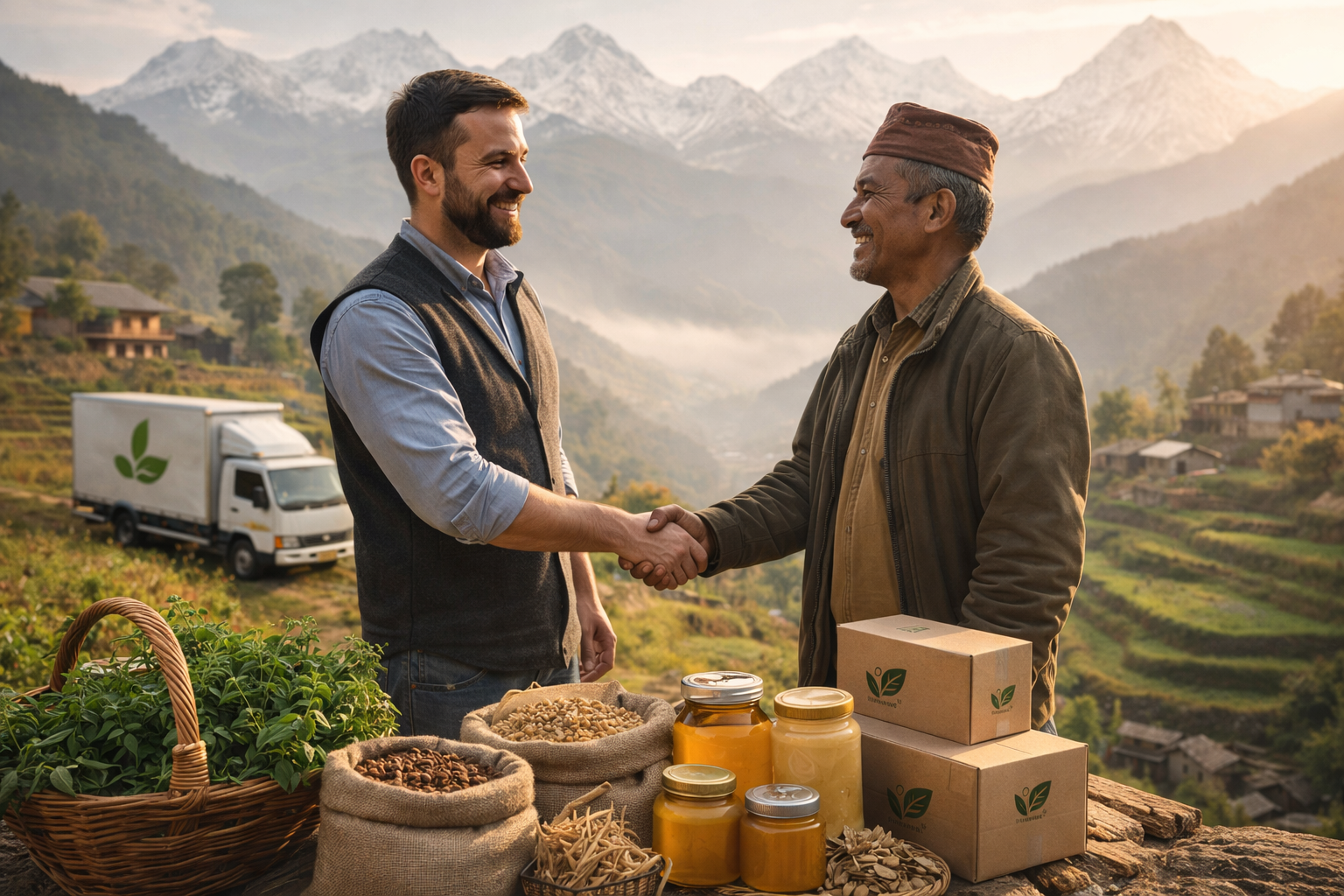
Starting an organic products business from regions like the Himalayas connects conscious consumers with traditional producers in ways that benefit everyone involved.
Your immediate action steps:
First, identify your specific niche within organic products. What region? Which products? Why you?
Second, establish relationships with at least three farmers or producer groups. Visit them personally.
Third, complete legal registrations and certifications. Start the paperwork process immediately—it takes longer than you expect.
Fourth, secure your business name and domain name. Brand identity can’t change easily later.
Fifth, build a minimal viable website with three products maximum. Make sure payment and shipping integrations work perfectly.
Sixth, conduct a test launch with a small marketing budget. Learn from real customers before scaling.
The path from Himalayan farms to successful online stores has been walked by many before you. Each business faces unique challenges, but the fundamental principles remain constant: authentic sourcing, transparent operations, compelling storytelling, and genuine care for both farmers and customers.
Your competitive advantage isn’t just the products you sell—it’s the relationships you build, the stories you tell, and the integrity you maintain as you grow. Customers can buy organic products anywhere. They’ll buy from you because they believe in your mission and trust your commitment to it.
Start small, stay authentic, and grow sustainably. The market for genuinely sourced, traditionally produced organic products continues to expand. Your business can serve that market while creating a meaningful, positive impact for farming communities.
The best time to start was five years ago. The second-best time is today.
Conclusion
An organic product business succeeds when it treats trust as its core product. Customers aren’t just buying honey, ghee, or grains—they’re buying confidence in where their food comes from, belief in the people who grow it, and alignment with values they care about deeply.
What makes businesses rooted in regions like the Himalayas truly powerful is the authenticity that can’t be manufactured. Altitude, climate, traditional knowledge, and community-based farming create products with stories that mass brands can never replicate. But those stories only matter if they’re backed by real relationships, fair pricing, transparent operations, and consistent quality.
The journey from farm to online store doesn’t require perfection on day one. It requires focus. Start with a narrow niche you understand intimately. Build genuine partnerships with farmers. Get the legal and technical basics right. Then let storytelling, education, and customer experience do the heavy lifting. Growth comes naturally when customers feel respected, informed, and connected.
In the long run, the strongest organic brands are not the loudest—they’re the most credible. They grow steadily, reinvest in their supply chains, and measure success not just in revenue, but in farmer livelihoods sustained and traditions preserved.
If you stay honest about what you sell, disciplined about how you operate, and committed to the people behind your products, you won’t just build an e-commerce business. You’ll build a bridge between conscious consumers and farming communities that deserves to last.
Start small. Stay rooted. Grow with integrity. The demand is already there—and it’s only getting stronger.